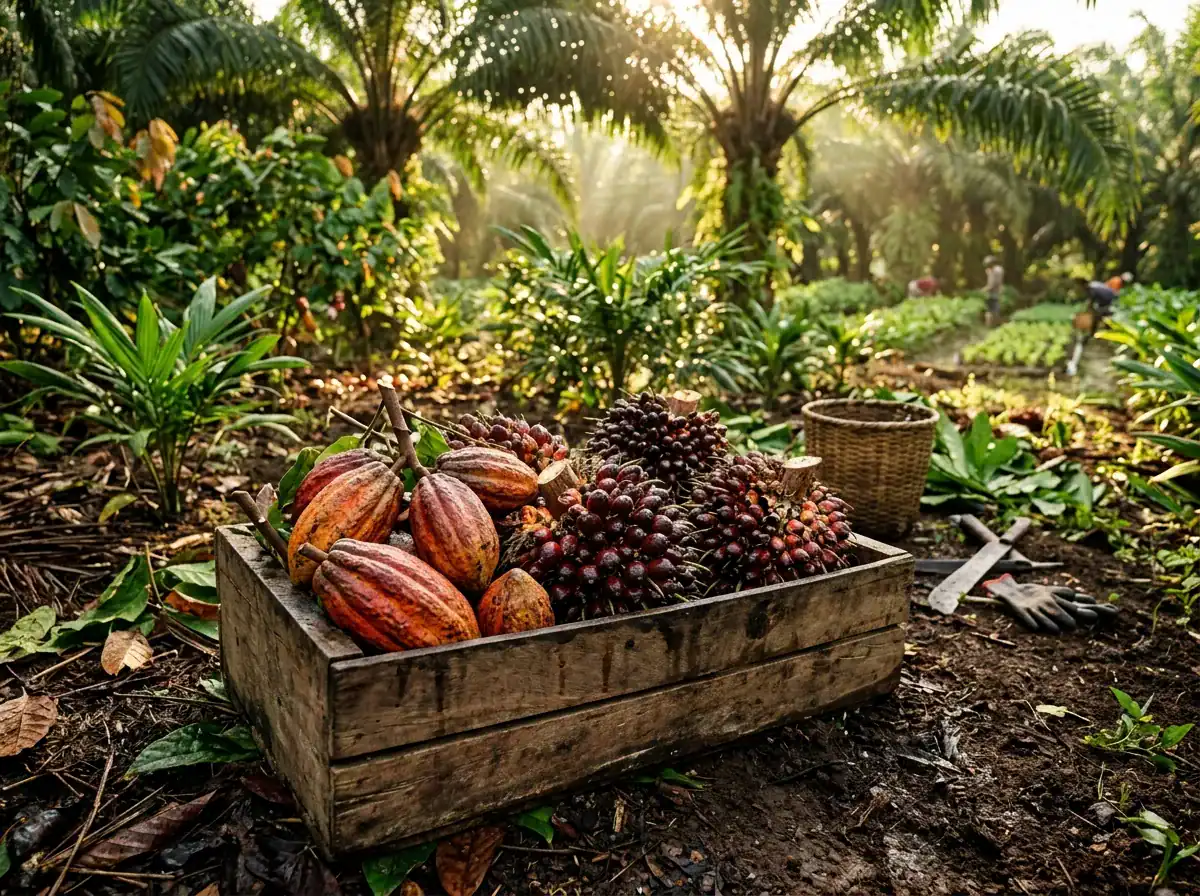
Managed agri-real estate blends land ownership with productive returns. We break down how our investment units work.
Agro-real estate sits at an interesting intersection of two of Nigeria’s most resilient asset classes: land and agriculture. Rather than simply holding a plot and waiting for surrounding development to push its value up, agro-real estate puts the land to productive use from the outset, generating income while it appreciates.
Cocoa, palm, and cassava are the three crops most commonly used in these structures, largely because of their established export and local demand, relatively low maintenance requirements once established, and multi-year productive lifespans that suit a long-term investment horizon.
In a typical managed unit, investors purchase a parcel of farmland that is then cultivated, maintained, and harvested by an experienced agricultural operator on their behalf. Investors receive periodic returns tied to the yield and market price of the crop, while retaining ownership of the underlying land, which itself continues to appreciate as an asset.
This model appeals particularly to investors who want their capital working on two fronts at once: the productive, cash-generating side of agriculture, and the appreciating, tangible side of land ownership. It also tends to carry a lower entry cost than urban residential or commercial land, making it accessible to a wider range of investors.
As with any agricultural investment, results depend on proper land preparation, crop management, and market conditions at harvest, so we always encourage investors to ask about the management track record and expected timelines before committing to a unit.